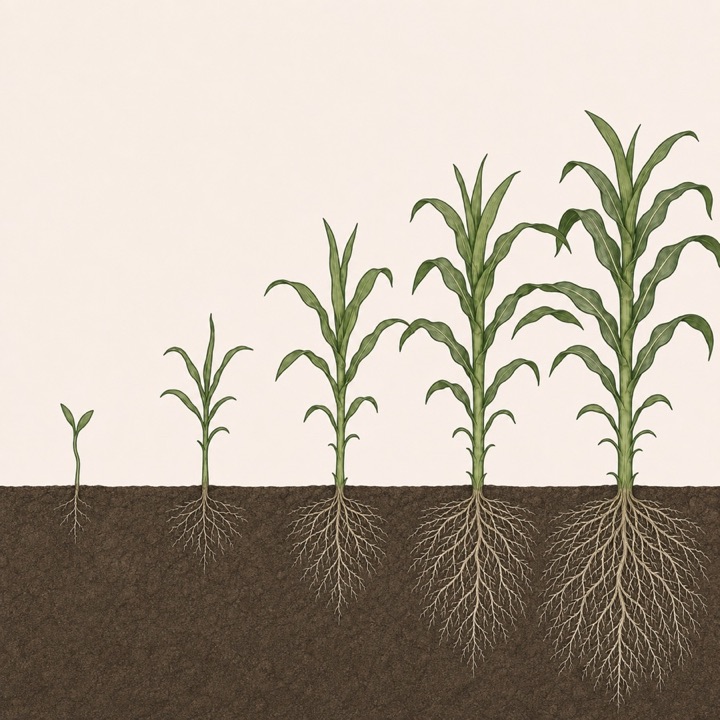
Canopy cover
Tracks canopy development from emergence through senescence, including how temperature, weather stresses, and soil-water availability accelerate or constrain green canopy expansion.
 AquaCropUC Davis Global Environmental Change LabView code
 The model
AquaCrop is FAO's process-based crop model for simulating crop growth and yield response to water. It balances biological realism with a relatively small set of parameters—making rigorous analysis accessible where data are limited.
Visit FAO AquaCrop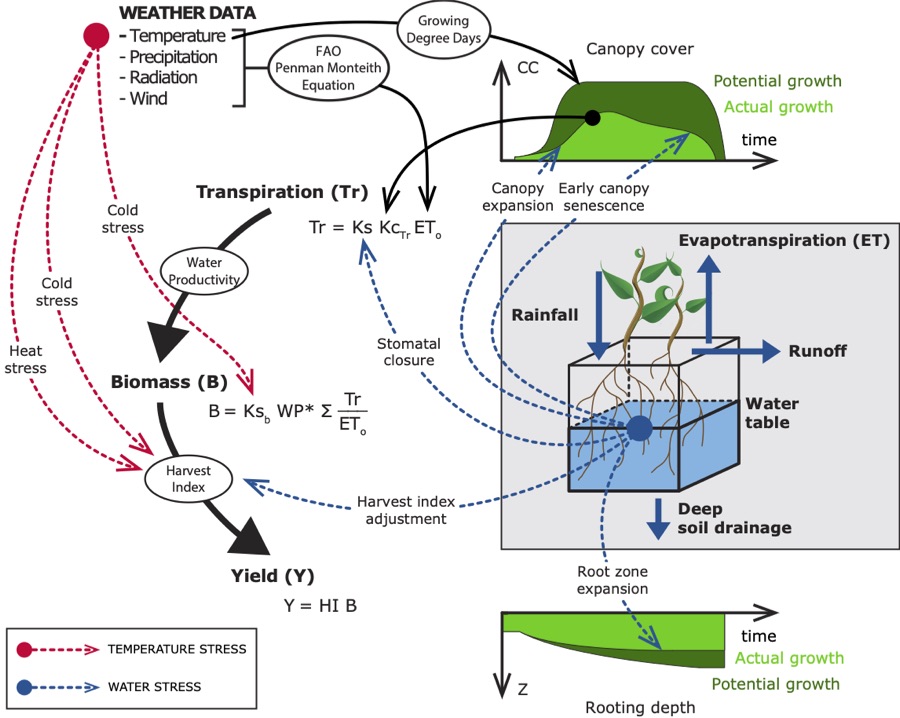 AquaCrop process schematic
Tracks canopy development from emergence through senescence, including how temperature, weather stresses, and soil-water availability accelerate or constrain green canopy expansion.
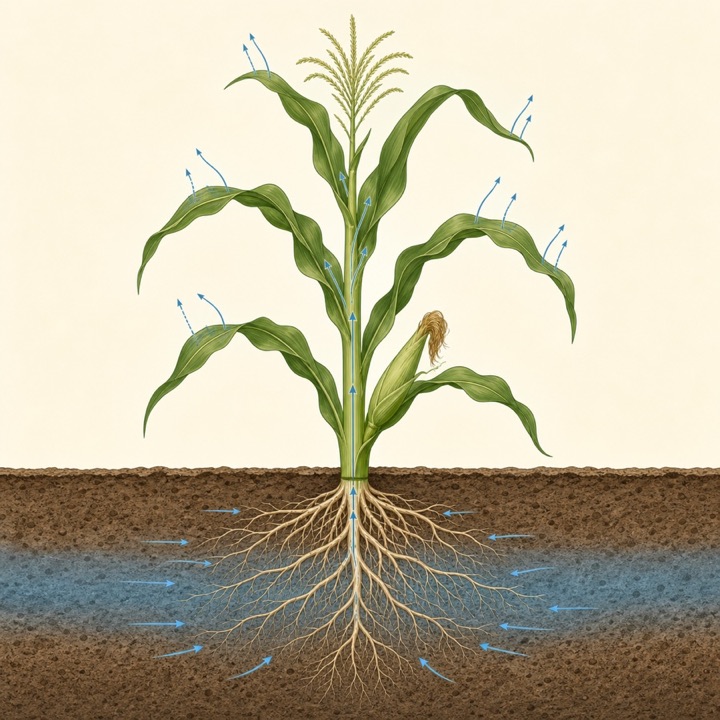
Calculates crop water use from reference evapotranspiration and canopy cover, while adjusting root uptake and stomatal response as soil water becomes limiting.
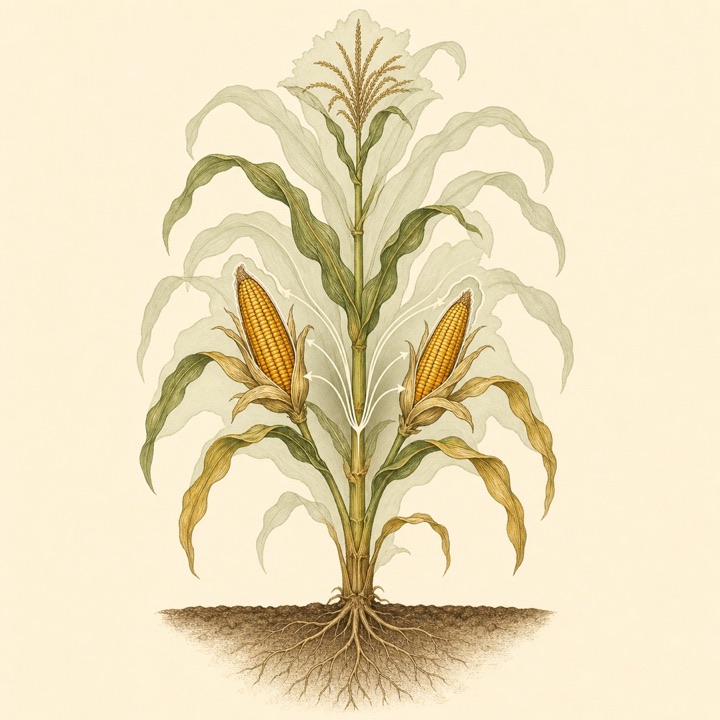
Converts transpiration into aboveground biomass through normalized water productivity and applies the dynamic harvest index to translate biomass into crop yield.
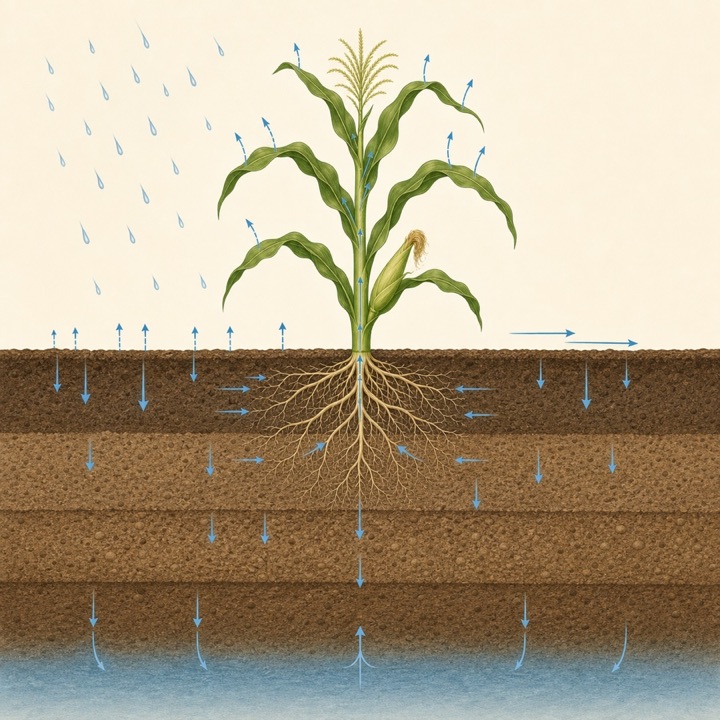
Represents the full hydrological cycle across multiple soil layers, including rainfall, runoff, infiltration, evaporation, root uptake, redistribution, deep drainage, and groundwater interactions.