Overview
The Global Dynamical and Structural Terrestrial Ecosystem Model (GDSTEM) is a process-based terrestrial ecosystem model designed to investigate how environmental change and human activities influence terrestrial ecosystems and the global carbon cycle.
GDSTEM couples carbon, nitrogen, and water cycling with explicit representations of vegetation structure, land-use history, and land management. Its cohort-based framework allows ecosystems with different ages and disturbance histories to coexist within the same landscape and evolve through time.
The model is designed for applications ranging from regional ecosystem studies to global simulations of terrestrial ecosystem dynamics.
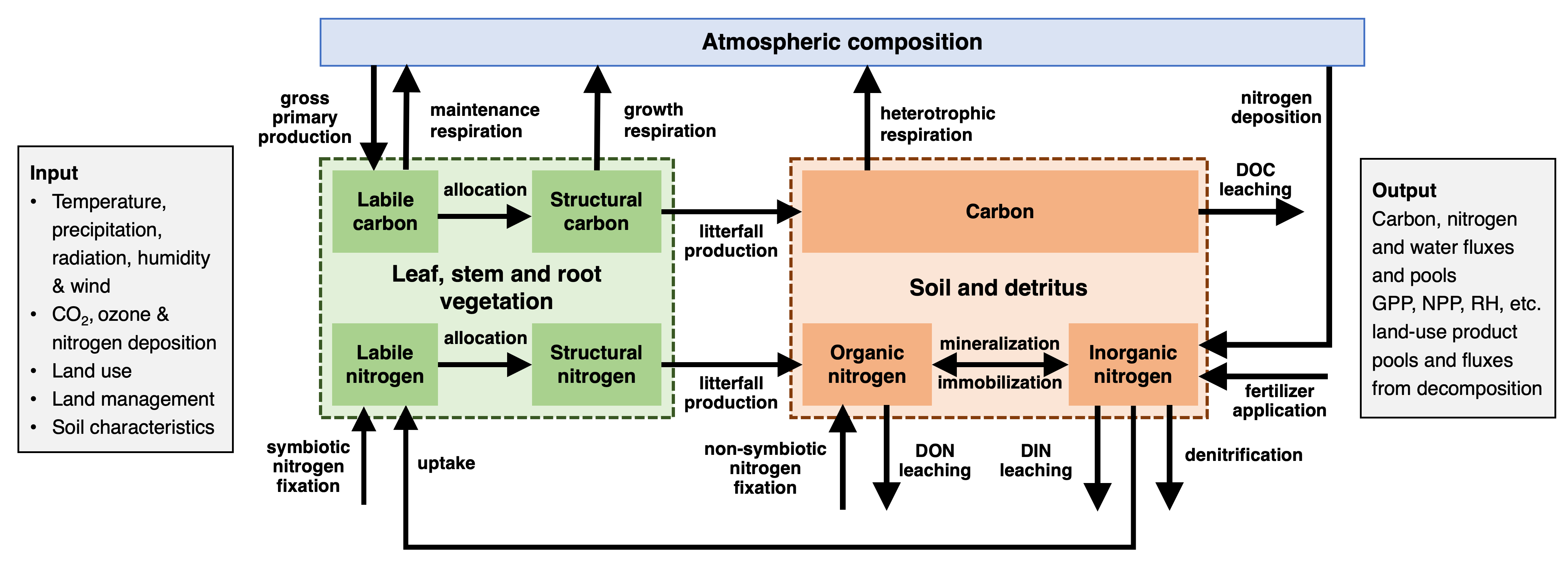
Figure 1. Conceptual overview of GDSTEM and its major ecosystem components and processes.
What distinguishes GDSTEM?
Ecosystem structure and history
GDSTEM represents vegetation using cohorts that retain information about ecosystem age and land-use history, providing a framework for examining the long-term ecological legacies of disturbance and land-use change.
Coupled ecosystem processes
Carbon, nitrogen, water, and vegetation dynamics are represented within a coupled process-based framework, allowing ecosystem responses to environmental change to emerge from interactions among biogeochemical and hydrological processes.
Land use and management
GDSTEM represents historical transitions among natural and managed ecosystems together with land-management processes. This allows differences in land use, management, and ecosystem history to influence terrestrial carbon, nitrogen, and water dynamics.
Global-change applications
GDSTEM is being developed to investigate terrestrial ecosystem responses to interacting environmental drivers, including climate variability and change, atmospheric CO₂, nitrogen deposition, tropospheric ozone, and land-use change. GDSTEM simulations also contribute to international assessments of the terrestrial carbon cycle, including the Global Carbon Budget.
Active development
GDSTEM is under active development, calibration, and evaluation. Current efforts include continued model improvement, global calibration and benchmarking, and development of new ecosystem disturbance capabilities.
A comprehensive model description and evaluation manuscript is currently in preparation. Scientific results, documentation, and the current model source code will be made available as this work progresses.
Learn more about the Model, explore Publications, meet the Development Team, or read about the model’s history and scientific lineage.